
Data-Driven Dynamo: People Analytics Driving Performance

Why is data a game-changer in people analytics?
Think of data collection and analysis as the foundation of people analytics. When HR professionals have…
Demonstrating the C-Level Business Impact of HR Analytics

In today’s rapidly evolving business landscape, achieving tangible results is at the core of any C-level decision-making process. People analytics (PA) is no exception. It’s not just about improving HR efficiency or producing fancy dashboards; it’s about aligning HR actions and decisions with strategic business goals, thus translating HR activities into tangible business outcomes. Let’s have a look at the C-Level Business Impact of HR Analytics. Connecting People Analytics to Business Priorities In our current economy, every tech purchase, especially something as impactful as PA, has to resonate with business priorities. When CFOs and CEOs are involved in the decision-making process, they’re looking for a clear Return on Investment (ROI). A robust People Analytics solution should be able to: Increase HR’s Business Impact: PA bridges the gap between gut-driven decisions and data-backed choices, effectively reducing risks associated with critical people decisions. With it, you can: Empower HR Business Partners (HRBPs) with data, enabling them to effectively collaborate with managers. Allow business analysts to shift from mundane data-crunching to strategic, value-adding activities. Hire and Retain the Right Talent: Acquiring and retaining top talent is a strategic concern at the executive level. People analytics plays a pivotal role in enhancing these efforts: Develop a structured action plan to tangibly reduce employee turnover, assessing the plan’s efficacy in real-time. Boost the quality of new hires by analyzing and understanding the common attributes of top-performing employees. Optimize Workforce Cost & Reduce Risks: Given the scrutinizing nature of our current economy, every cent counts. Workforce costs, one of the most substantial business expenses, need keen oversight. People analytics provides insights to: Pinpoint key drivers of labor expenses, highlighting areas of optimization and potential savings. Ensure compensation strategies align with budget constraints, organizational goals, and stand competitive in the market relative to industry peers. Why It’s More Than Just a ‘Nice-to-Have’ In a world brimming with technological solutions, it’s essential to discern between what’s ‘nice-to-have’ and what’s ‘essential’. People Analytics unequivocally falls into the latter category. Why? Because it allows organizations to make informed decisions that resonate with their overarching business goals, especially in unpredictable economies. Being able to demonstrate the tangible business impact of HR decisions, supported by PA, not only showcases the importance of the HR department but also underscores its strategic alignment with business objectives. This approach aids internal champions in advocating for PA by establishing clear linkages to outcomes that matter most to the executive suite. Conclusion People Analytics is not a mere operational tool but a strategic function that intertwines daily HR decisions with overarching business objectives. By leveraging it, companies can not only increase HR’s business impact but also make substantial headways in hiring, retention, and cost optimization. And in an age where every business decision undergoes rigorous scrutiny, having a data-driven compass like People Analytics is not just recommended; it’s imperative to understand the C-Level business impact of HR Analytics Taking the Next Step Forward Are you ready to translate your HR activities into tangible business outcomes and align with your strategic goals? Dive deeper into the world of People Analytics with us. Schedule a consultation today and let’s discuss how you can harness data to make impactful HR decisions that resonate at the C-level. Don’t just be data-driven, be strategically aligned. 🔗 Book Your People Analytics Consultation Now
Harnessing HR Analytics for ESG Excellence
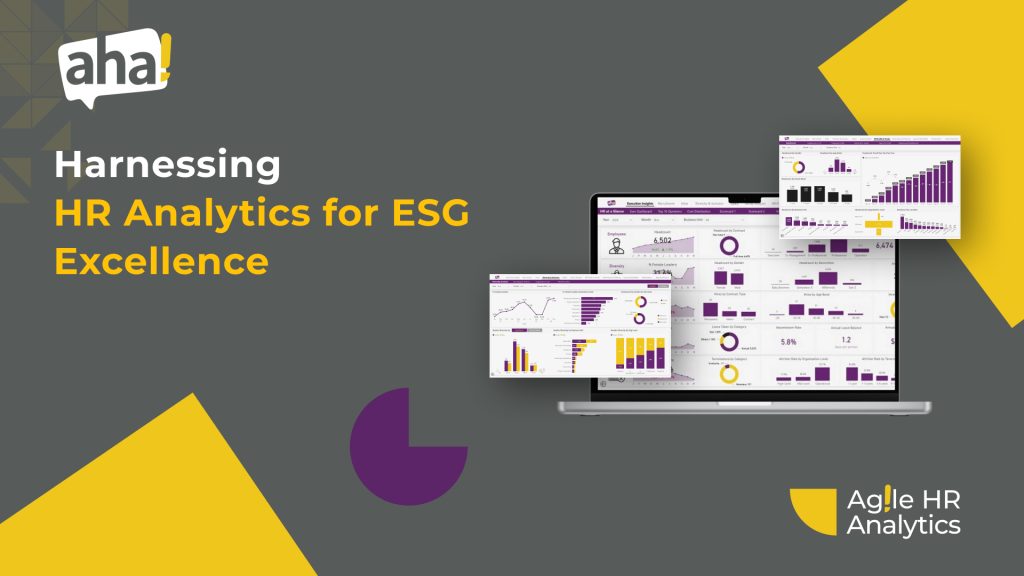
In today’s business world, ESG (Environmental, Social, and Governance) principles are more than just buzzwords—they represent the very foundation of sustainable and responsible business operations. As organizations scramble to realign with these global standards, many are realizing the potential of an unexpected ally: HR Analytics. Insights into the Social Aspect of ESG At the core of the ‘S’ in ESG is people. Social responsibilities encompass employee relations, diversity and inclusion, health and safety, and labor standards. HR Analytics plays a pivotal role in capturing and deciphering this data. Through advanced analytics, HR can track diversity metrics, monitor well-being initiatives, and ensure fair labor practices. For instance, dashboards can highlight gender pay discrepancies or departments that lack diversity. Thus, providing actionable insights for HR to rectify and align with ESG standards. Guiding the Governance Component Governance relates to the ethical conduct of business, transparency, and accountability. Here, HR Analytics can be instrumental in measuring leadership effectiveness, mapping succession planning, and ensuring ethical recruitment practices. When it comes to training and development, analytics can identify gaps in areas related to ESG, such as ethical decision-making or sustainability. By addressing these areas proactively, businesses fortify their commitment to robust governance. Supporting Environmental Objectives with HR Insights While HR might seem distant from the environmental pillar of ESG, its insights are crucial. Through HR analytics, organizations can understand the carbon footprint of business travels, the impact of remote work on energy consumption, or even the effectiveness of internal environmental training programs. By analyzing these metrics, companies can strategize ways to reduce their carbon footprint, be it by promoting virtual meetings, encouraging carpooling, or providing eco-friendly transportation options. Predictive Analytics and ESG One of the significant benefits of HR Analytics is its ability to predict trends based on data. When applied to ESG, this means foreseeing potential areas of concern before they become major issues. Whether it’s predicting departments that might struggle with diversity, forecasting the environmental impact of certain HR decisions, or identifying potential governance risks, predictive analytics acts as an early warning system. It gives businesses the chance to course-correct in real-time, ensuring they remain on track with their ESG commitments. Continuous Improvement through Feedback Loops HR Analytics can help establish feedback mechanisms, collecting employee feedback on ESG initiatives. Whether it’s through regular surveys, focus groups, or digital feedback platforms, this data is invaluable. For example, employees might offer insights into improving waste management, suggest areas for further diversity training, or highlight governance-related concerns. By leveraging this feedback, companies can make continuous, informed improvements to their ESG strategies. Diversity Analytics Example Dashboards: Agile HR Analytics Conclusion The path to ESG excellence is multi-faceted, demanding a cohesive effort from all corners of an organization. In this journey, HR Analytics emerges not just as a tool but as a strategic partner. By offering data-driven insights, predictive capabilities, and continuous feedback mechanisms, HR Analytics ensures that businesses remain aligned, proactive, and committed to their ESG goals. In the evolving landscape of corporate responsibility, those organizations that leverage every tool at their disposal, including HR Analytics, will lead the charge towards a sustainable and equitable future. Ready to Transform Your ESG Strategy with HR Analytics? Tap into the potential of data-driven insights for your organization’s ESG initiatives. Schedule a free consulting call with Agile HR Analytics today and embark on a journey towards sustainability, inclusivity, and excellence. Book Your Free Consultation Now!
Measuring the Impact of People Analytics

To ensure the success of your people analytics initiatives and demonstrate their value to stakeholders, it’s crucial to measure their impact. This blog will discuss best practices for establishing a framework for measuring success, tracking return on investment (ROI) and other performance indicators, and adjusting your strategies based on results. Establishing a Framework for Measuring Success Developing a clear framework for measuring the success of your people analytics initiatives is essential for evaluating their effectiveness and communicating their value. When establishing a measurement framework, consider the following steps: Define Objectives: Clearly articulate the specific objectives of your people analytics initiatives, such as improving employee retention, enhancing talent acquisition, or boosting employee engagement. Identify Key Performance Indicators (KPIs): Determine the KPIs that will best measure progress towards your objectives. These might include metrics such as time-to-fill, turnover rate, or employee satisfaction scores. Set Targets and Benchmarks: Establish specific targets for each KPI, along with relevant benchmarks for comparison, such as industry averages or historical performance data. Develop a Measurement Plan: Outline a plan for collecting and analyzing the necessary data to track your KPIs, including the data sources, tools, and processes you will use Tip: Establish a clear framework for measuring the success of your people analytics initiatives. Track ROI and other performance indicators to understand the impact of your efforts and inform future decision-making. Tracking ROI and Other Performance Indicators Once you have established a framework for measuring success, it’s essential to track your ROI and other performance indicators regularly. Consider the following best practices for tracking and reporting on your people analytics initiatives: Regular Monitoring: Monitor your KPIs consistently to track progress and identify trends, issues, or opportunities for improvement. Dashboard Reporting: Use dashboard reporting tools to visualize your KPIs and make the data easily accessible to stakeholders ROI Calculation: Calculate the ROI of your people analytics initiatives by comparing the benefits achieved, such as cost savings or productivity gains, to the costs of implementation, such as software, training, or personnel expenses. Stakeholder Communication: Regularly communicate your progress and results to stakeholders, highlighting the impact of your people analytics initiatives and demonstrating their value. Example reporting solution from Agile HR Analytics Adjusting Strategies Based on Results As you track the impact of your people analytics initiatives, it’s crucial to use the insights gained to inform and adjust your strategies as needed. Consider the following best practices for leveraging your measurement results to optimize your people analytics initiatives: Data-Driven Decision Making: Use the insights from your measurement efforts to inform your decision-making, adjusting your strategies and tactics based on what the data indicates is working or not working. Continuous Improvement: Embrace a culture of continuous improvement, using your measurement results to identify opportunities for enhancing the effectiveness of your people analytics initiatives. Agile Methodologies: Adopt agile methodologies to enable more responsive and adaptive adjustments to your strategies, ensuring your people analytics initiatives remain aligned with your organization’s evolving needs and goals. By establishing a robust framework for measuring the impact of your people analytics initiatives, tracking ROI and other performance indicators, and adjusting your strategies based on results, you can optimize the effectiveness of your people analytics efforts and demonstrate their value to stakeholders. This approach will help you build a strong case for the continued investment in and support of data-driven HR initiatives within your organization. Want to learn more? Download our eBook!
Real-World Case Studies: Success Stories and Lessons Learned

Examining real-world case studies of organizations that have successfully implemented people analytics can provide valuable insights into the challenges faced, lessons learned, and best practices that can inform your own people analytics initiatives. This blog will discuss several success stories and key takeaways from companies that have effectively leveraged people analytics to drive value for their organizations. Company A: Improving Employee Retention Through Predictive Analytics Company A, a large technology firm, faced high employee turnover rates, resulting in significant costs and disruptions. By implementing a people analytics program, they were able to leverage predictive analytics to identify the key factors contributing to employee attrition and develop targeted retention strategies. Challenges: Company A faced challenges in consolidating and analyzing data from various sources, such as HRIS, performance reviews, and employee engagement surveys Lessons Learned: The company successfully overcame these challenges by investing in data integration and analytics tools, as well as building a dedicated people analytics team with a mix of HR and data analysis expertise. Key Takeaways: Company A’s success highlights the value of predictive analytics for identifying and addressing employee retention challenges, as well as the importance of having the right tools and expertise to support your people analytics initiatives Company B: Enhancing Talent Acquisition Through Data-Driven Recruitment Company B, a global retailer, sought to improve the efficiency and effectiveness of its talent acquisition processes. By embracing a data-driven recruitment approach, the company was able to streamline its hiring processes, identify high-potential candidates, and reduce time-to-fill metrics. Challenges: Company B encountered challenges in standardizing its recruitment data and processes across different regions and business units Lessons Learned: The company addressed these challenges by implementing a centralized applicant tracking system (ATS) and establishing data governance and quality standards for recruitment data. Key Takeaways: Company B’s experience underscores the benefits of data-driven recruitment for optimizing talent acquisition outcomes and the importance of standardizing and governing recruitment data to ensure consistent, reliable insights Company C: Boosting Employee Engagement Through Personalized Learning and Development Company C, a financial services organization, recognized the need to improve employee engagement and productivity. By using people analytics to develop personalized learning and development (L&D) programs, they were able to boost employee satisfaction and performance Challenges: Company C faced difficulties in measuring the impact of its L&D initiatives and tailoring the programs to the specific needs and preferences of individual employees. Lessons Learned: The company tackled these challenges by integrating data from various sources, such as performance reviews, skills assessments, and employee feedback, to develop a comprehensive understanding of each employee’s learning needs and preferences. Key Takeaways: Company C’s success demonstrates the potential of people analytics to enhance employee engagement and performance through personalized L&D programs, as well as the value of integrating diverse data sources to generate more comprehensive and actionable insights These case studies illustrate how organizations across various industries have successfully implemented people analytics initiatives to address a range of HR challenges. By examining their experiences and learning from their successes and challenges, you can apply these valuable insights and best practices to your own people analytics journey, driving significant value for your organization. Want to learn more? Download our eBook! There is a lot of “free” info out there about HR functionality, team building and improvement, but none of them compare to our data-driven, practical and real world guidance, summarised in this digestible and uncomplicated handbook.
The benefits of implementing a data-driven HR function

In today’s competitive business landscape, the role of Human Resources (HR) has evolved from a purely administrative function to a strategic partner responsible for driving organizational growth and success. To effectively navigate this transformation, HR leaders must adopt a data-driven approach, leveraging the power of people analytics to make informed decisions that positively impact their workforce and the organization as a whole. People analytics, also known as HR analytics or workforce analytics, is the practice of using data to analyze and draw insights about an organization’s workforce. It encompasses various aspects of HR, including talent acquisition, employee engagement, learning and development, performance management, and retention. By harnessing the power of data, HR professionals can make evidence-based decisions, identify trends and patterns, and uncover opportunities for improvement. benefits of implementing a data-driven HR function The benefits of implementing a data-driven HR function are numerous and have a direct impact on an organization’s bottom line. Some of these benefits include: Improved Talent Acquisition: By analyzing recruitment data, HR can identify the most effective hiring channels, reduce time-to-fill, and enhance the overall quality of new hires. Enhanced Employee Engagement: People analytics can help HR leaders understand the factors that contribute to employee satisfaction and motivation, enabling them to develop targeted initiatives that improve engagement and productivity. Streamlined Learning and Development: Data-driven insights can help HR teams identify skill gaps and training needs, ensuring that employees receive the right support to grow and thrive in their roles. Effective Performance Management: By leveraging data, HR professionals can establish objective performance metrics, identify high-potential employees, and provide personalized feedback and development opportunities. Increased Retention and Reduced Turnover: People analytics can help HR pinpoint the root causes of employee attrition, allowing them to implement targeted strategies to retain top talent and reduce turnover costs. By embracing people analytics and fostering a data-driven HR function, organizations can unlock valuable insights, drive strategic decision-making, and ultimately, ensure the success of their workforce. As we move forward in this handbook, we’ll explore the essential steps and best practices for implementing people analytics, as well as real-world case studies and emerging trends in this rapidly evolving field.
5 Ways in which HR Data Analysis Improves Overall Business Functioning

Ways to Improve Recruitment with HRMS Data and People Analytics Recruitment is one of the biggest areas where HR can shine. It is more than just hiring people; it’s finding the right people with the talent and skills you need who want to stay with your company. It’s finding people who will grow with the business and make a positive impact throughout their career. This is where HRMS and people analytics comes in to help. It doesn’t matter if you’re a big or small organization or your recruiting needs are few or many, combining your HRMS with people analytics will provide you with a valuable weapon in the fight to attract the best talent to your organization. Why Better HR Analytics and Processes Lead to Better Recruiting A best-of-breed HRMS, which helps HR improve virtually any transactional process (from managing payroll and time off requests to tracking benefits payments), greatly reduces the amount of time your HR team spends on more administrative duties, allowing them to increase department efficiency; this is the top reason why businesses implement an HRMS according to recent HR research. When this kind of technology is combined with a people analytics solution that surfaces insights from the HRMS–and connects it together with all employee data in all HR systems–recruiters gain a complete picture of the employee lifecycle that will help them more easily and effectively meet the demands of the organisation. And these are just the broad-level benefits. Let’s look at five surprising ways to use the combination of HRMS data and people analytics to help you in your recruitment programs: 1. Predict the future of recruitment By feeding your HRMS employee data into a people strategy platform, you can perform predictive analysis in order to anticipate future retirements or promotions. Determine where future holes may exist in the organizational chart long before the hiring manager puts in a request to hire. 2. Pitch the correct salary Current employee salaries are a good data point when planning for a new hire. Conduct a data analysis on peer positions, as well as the ones above and below your requisition, in order to get a sanity check for the future anticipated salary. 3. Profile the data of top performers to design better candidate profiles How often have you heard a hiring manager say, “We want another employee just like Joe!” If you analyse the employee data for Joe and your other top performers, you will be better positioned to find that needle in the haystack. By reviewing the data of top performers, you can start to find trends as to where your top employees come from, and how to find more just like them. You may also see trends in your source of hire (i.e., where the best hires come from), their education level, their area of study, the number of years of experience they have, and more. 4. Proactively mine your data for hidden recruitment sources While recruiters know about sources such as the hiring fair at the local university or the tech job fair, the data in your HRMS can help you to find other, lesser known hiring sources. In particular, if you analyze the sources of hired candidates, i.e., employees, this will give you a better target than if you review only the sources of candidates overall. Likewise, you may identify trends you hadn’t even considered before, such as maybe your best hires come from employee referrals or one particular job board. Using people analytics allows you to dig deeper into the data and enable more successful hiring practices. 5. Look in your own backyard for candidates A company’s best candidate can be a current employee. The issue is, either the employee does not know about the opening or the recruiter does not know the employee exists. Are you making it easy for current employees to register interest and find open positions? Solutions can range from something as simple as forwarding a weekly email of open positions to something more complex such as mining the database for employee talent. Either way, your HRMS and people analytics will be the backbone of any such efforts. Take Your Recruitment to the Data-driven Level In order for recruitment to be successful, you must continuously look for ways to improve hiring. Combining your HRMS data with people analytics enables you to confidently double down on your strengths and eliminate the areas where you’re weakest so you can meet your organization’s every talent need. The world of recruitment is pushing HR technology further forward, and no doubt we’ll see many new benefits alongside these new advancements in the future.
Use-cases and examples of how what-if analysis can help HR managers

What-if analysis is an essential tool for HR manager. It enables them to explore different scenarios and predict the impact of changes on the organization. By creating simulations that take into account historical data and other variables, HR managers can make informed decisions and take proactive steps to achieve their business objectives. What-if analysis can help HR managers identify potential risks and opportunities, optimize workforce planning, improve employee engagement and retention, and enhance overall organizational performance. By leveraging the power of what-if analysis in HR analytics, organizations can stay competitive in a rapidly changing business landscape and ensure the long-term success of their business. Workforce Planning: HR managers need to ensure that they have the right number of employees with the right skills to meet their business objectives. By using what-if analysis, they can simulate different hiring scenarios and predict the impact on employee headcount, turnover, and other factors. For example, a company planning to expand its business operations may want to explore different hiring scenarios to support the expansion. By simulating the impact of different hiring targets, the company can make informed decisions about their hiring targets and their impact on their workforce and business performance. Example: A company is planning to expand its business operations into a new geographic region. The company needs to hire additional employees to support the expansion, but they are unsure how many employees they need to hire. The company uses HR analytics software to simulate different hiring scenarios and predict the impact on employee headcount and other factors. By simulating the impact of different hiring targets, the company can make informed decisions about their hiring targets and their impact on their workforce and business performance. Employee Retention: HR managers need to ensure that they can retain their top talent, as high employee turnover can have a significant impact on the organization, including increased costs and decreased productivity. By using what-if analysis, HR managers can explore different scenarios and predict the impact of different factors on employee retention. For example, an HR manager may want to explore the impact of increasing salaries on employee retention. By creating a simulation that takes into account historical data and other variables such as employee satisfaction and tenure, the HR manager can determine the impact of different salary increases on employee turnover. Example: A company is experiencing high employee turnover and wants to improve employee retention. The HR manager wants to explore the impact of increasing salaries on employee retention. The company uses HR analytics software to simulate the impact of different salary increases on employee retention. By simulating the impact of different salary increases, the HR manager can make informed decisions about salary increases and their impact on employee retention. Performance Management: Performance management is an essential aspect of HR, and what-if analysis can help HR managers make informed decisions about performance metrics. By simulating different performance metric weightings, HR managers can predict the impact on employee productivity. For example, an HR manager may want to explore the impact of different performance metrics, such as sales, customer satisfaction ratings, and employee engagement, on employee productivity. By creating a simulation that considers historical data and other variables, the HR manager can determine the impact of different performance metric weightings on employee productivity. Example: A company wants to improve employee productivity and wants to know which performance metrics are most effective. The HR manager uses HR analytics software to simulate the impact of different performance metric weightings on employee productivity. By simulating the impact of different performance metric weightings, the HR manager can make informed decisions about performance metrics and their impact on employee productivity. In conclusion, what-if analysis is a powerful tool for HR managers looking to optimize their workforce, improve employee engagement and retention, and enhance overall organizational performance. By simulating different scenarios and predicting their impact on the organization, HR managers can make informed decisions and take proactive steps to achieve their business objectives. Want to mine your HR data to help your organization thrive? Agile HR Analytics can help. To find out more, email info@agile-hr-analytics.com or fill in this contact form.
How inflation and rising costs impact HR

Inflation and rising costs impact HR.
Read to understand
– How rising inflation rates impact HR
-The types of non-financial incentives you can offer to increase employee loyalty
-How HR analytics can help you retain employees in a tough economic climate
5 Ways in which HR Data Analysis Improves Overall Business Functioning

In a 2020 Deloitte report, 46% of surveyed organisations believe that the biggest impacts to the evolution of HR in the next 12-18 months are increasing new capabilities to thrive in the digital age through digital fluency and data analytics. In another (2019) Human Capital Trends survey, Deloitte highlighted that 26% of companies report effectively using technology and analytics. The upward trend in adopting HR data analysis for improved business functioning makes it a priority for modern businesses. Below are 5 ways in which HR data analysis can help improve the overall functioning of your business: Improved Decision-Making Decision-making in HR in successful businesses is based on information from data analysis. Deciding on when to recruit or develop talent affects all departments of the business. Thus, making use of HR data analysis can determine the need for given decisions in particular departments and the potential impact of the decisions. Decision-making on the basis of HR data analysis goes beyond the scope of HR functions and addresses the needs of the entire organisation. Developing Employee Wellness Support Programs HR data captures the wellness status of the workforce. The continuous improvement of employee wellness management programs could benefit from the use of HR data analysis. HR data metrics touching on health or wellness include age and activeness. Working with available data metrics helps align the business with legal requirements on employee health and wellness management. This process brings the opportunity to determine the best approach in dealing with employees with different health needs. Predicting Future Business Performance HR data analysis helps predict the effectiveness of employee performance in the future across respective departments. Based on HR data insights, managers can determine the employees most likely to exit the business in the short or long-term. Decisions can be made about specific employees in need of further training, support, and development in the business. Predictive capabilities in HR data analysis can help prepare businesses for potential challenges in advance and take advantage of arising opportunities. In this case, fact-based decisions can be made about business functions that will impact the organisation’s future. Aligning the Business with Global Business Trends Businesses can benefit from national and global environments. HR data analysis highlights the strengths and weaknesses of the employee body in relation to particular identified global trends. Comparing internal employee performance with emerging global standards reveals the competitiveness of the business. Respective department managers can therefore attempt to align employee competencies to match global standards and attain long-term success. Driving Innovation in the Business HR data analysis reveals different areas in which employee work performance can undergo automation. Adopting innovative measures in the business can transform sections of the business or its entire operational structure. Thus, innovation, as informed by HR data analysis, helps automate various mundane employee tasks and administrative duties in the business and allow capable employees to spend more time on important tasks. Sources: Lalwani, P. 2019. What Is HR Analytics? Definition, Importance, Key Metrics, Data Requirements, and Implementation. Retrieved from https://www.hrtechnologist.com/articles/hr-analytics/what-is-hr-analytics/ Hussung, T., 2019. HR Analytics Are Changing Modern Business: How Can Your Company Benefit? https://www.allbusiness.com/hr-analytics-changing-modern-business-can-company-benefit-112971-1.html Straz, M. 2016. HR Analytics: How Should Big Data Be Used in the Workplace? Retrieved from https://www.entrepreneur.com/ Deloitte Insights, 2016. Introduction—The new organization: Different by Design. Retrieved from https://www2.deloitte.com/us/en/insights/focus/human-capital-trends/2016/human-capital-trends-introduction.html Deloitte Development LLC, 2016. Enabling business results with HR “Measures that matter” Retrieved from