
Pre-Built Attrition Prediction Pack for Power BI—Explainability and Deployment

Overview and First Impressions When evaluating enterprise HR analytics solutions, one of the most critical capabilities organizations need is the ability to predict and prevent employee attrition. The challenge, however, lies not just in having predictive models;it’s in deploying them quickly, understanding how they work, and acting on their insights in real time. Pre-built attrition prediction packs for Power BI have emerged as a compelling solution for organizations seeking to accelerate their people analytics maturity without lengthy implementation cycles. The Agile HR Analytics platform, built on the Microsoft stack, offers a ready-to-use attrition prediction pack designed specifically for enterprises that want to combine rapid deployment with the transparency and governance that regulated industries demand. Unlike custom-built models that can take months to develop and validate, pre-built packs deliver immediate value while maintaining the explainability that CHROs and data governance teams require. This review examines the Agile HR Analytics attrition prediction pack in detail, evaluating its core features, deployment methodology, explainability mechanisms, and practical value for enterprise organizations. We’ll assess how it stacks up against competitors and help you determine whether this solution aligns with your organization’s people analytics strategy. What Is an Attrition Prediction Pack? Before diving into the specifics of the Agile HR Analytics offering, it’s important to understand what makes a pre-built attrition prediction pack valuable. An attrition prediction pack is a comprehensive bundle that includes pre-built data models, machine learning models, Power BI dashboards, and supporting documentation;all designed to work together seamlessly. Traditional approaches to attrition prediction require data teams to spend weeks or months on data preparation, feature engineering, model selection, and validation. Organizations must integrate HR data from multiple sources (HRIS, payroll, surveys, performance systems), clean and transform that data, build or train machine learning models, and finally create dashboards that make predictions actionable. A pre-built pack collapses this timeline dramatically. Rather than starting from scratch, your team inherits a battle-tested framework that has already been optimized for common HR datasets and validated across multiple organizations. This approach is particularly valuable for enterprises evaluating people analytics platforms where time-to-value and governance are paramount concerns. The Agile HR Analytics pack leverages the Microsoft stack;specifically Power BI for visualization, Azure for data processing, and Azure OpenAI for advanced AI capabilities;to deliver a solution that integrates seamlessly with existing enterprise infrastructure. This Microsoft-native approach eliminates compatibility headaches and allows organizations to build on investments they’ve already made. Core Architecture and Data Integration The foundation of any effective attrition prediction solution is robust data integration. Agile HR Analytics addresses this through pre-built connectors and data models that integrate HR, payroll, survey, and business data into a unified analytical layer. The pack includes connectors for major HRIS platforms, payroll systems, and employee survey tools. Rather than requiring custom ETL development, the integration layer handles the complexity of mapping disparate data sources into a standardized schema. This is critical because attrition prediction models require comprehensive employee data;demographics, tenure, compensation, performance ratings, engagement scores, and organizational structure;from multiple systems. The pre-built data models follow dimensional modeling best practices, organizing data into fact and dimension tables optimized for both Power BI performance and machine learning feature engineering. This architecture enables fast query performance on large datasets while maintaining the flexibility to add custom attributes or extend the models for organization-specific use cases. One standout feature is the support for on-premises and hybrid hosting options. Organizations in regulated industries;financial services, healthcare, government;often have strict data residency requirements. The Agile HR Analytics platform accommodates this through Azure on-prem hosting capabilities, ensuring that sensitive HR data never leaves your infrastructure while still benefiting from cloud-scale analytics capabilities. Role-based access controls (RBAC) are built into the architecture, allowing organizations to segment data by department, geography, or job level. This means a regional HR manager sees only relevant attrition data, while a CHRO sees consolidated enterprise views. This governance approach is essential for enterprise HR analytics strategy and helps maintain data privacy compliance. Predictive Model and Machine Learning Capabilities The attrition prediction model at the heart of the pack is where technical sophistication meets practical usability. The model uses gradient boosting algorithms;specifically optimized for HR datasets;to identify employees at risk of leaving. Rather than relying on a single statistical approach, the pack employs ensemble methods that combine multiple algorithms to improve prediction accuracy and robustness. The model considers dozens of features derived from your HR data: tenure, compensation relative to market, performance trends, engagement survey responses, promotion history, manager tenure, team turnover, and organizational changes. Unlike simple rules-based approaches (“anyone with a performance rating below 3 is at risk”), machine learning models capture complex, non-linear relationships in your data. An employee might be at high risk not because any single factor is problematic, but because a specific combination of factors;such as recent peer departures plus a lateral move and unchanged compensation;creates a departure risk pattern. What distinguishes this pack is its emphasis on explainability. Many machine learning models operate as “black boxes,” providing predictions without clarity on why. This creates governance and trust problems, particularly in HR contexts where decisions affect real people. The Agile HR Analytics pack includes SHAP (SHapley Additive exPlanations) values and feature importance visualizations that show exactly which factors drive each prediction. When the model predicts that an employee is at high risk of attrition, the dashboard displays the contributing factors in rank order. Perhaps compensation is the primary driver, followed by lack of recent career development, and a secondary factor of recent team turnover. This granularity enables HR teams to take targeted action;a compensation adjustment, a development conversation, or a team restructuring;rather than generic retention efforts. The model retrains automatically on a configurable schedule (typically monthly), incorporating new employee data and learning from actual departures. This continuous improvement cycle ensures that predictions remain calibrated as your organization evolves. Dashboard Design and User Experience Predictive models are only valuable if business users can understand and act on their insights. The Agile HR Analytics attrition prediction pack includes purpose-built dashboards designed for different stakeholder personas: CHROs, HR business
Harnessing HR Analytics for ESG Excellence
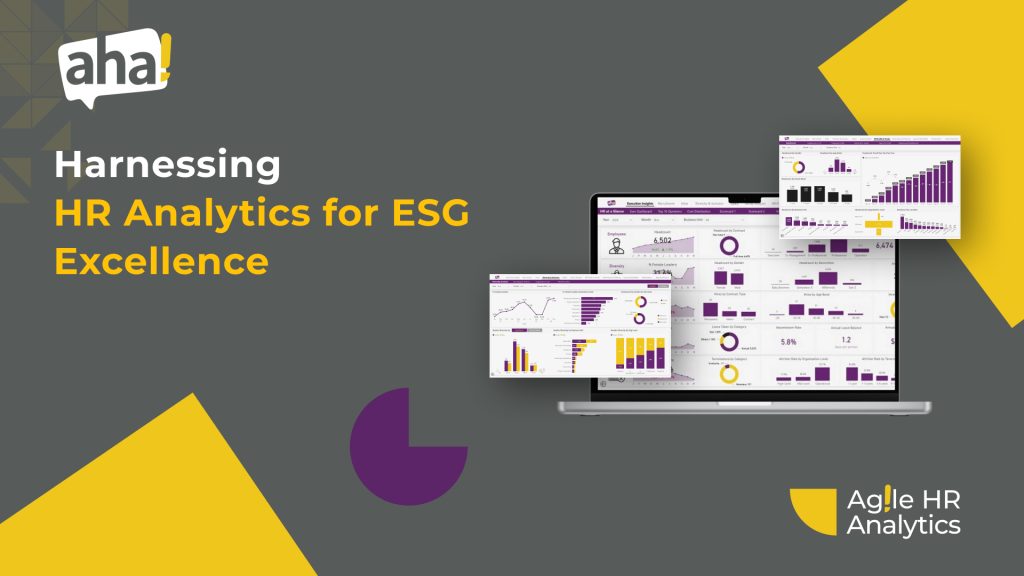
In today’s business world, ESG (Environmental, Social, and Governance) principles are more than just buzzwords—they represent the very foundation of sustainable and responsible business operations. As organizations scramble to realign with these global standards, many are realizing the potential of an unexpected ally: HR Analytics. Insights into the Social Aspect of ESG At the core of the ‘S’ in ESG is people. Social responsibilities encompass employee relations, diversity and inclusion, health and safety, and labor standards. HR Analytics plays a pivotal role in capturing and deciphering this data. Through advanced analytics, HR can track diversity metrics, monitor well-being initiatives, and ensure fair labor practices. For instance, dashboards can highlight gender pay discrepancies or departments that lack diversity. Thus, providing actionable insights for HR to rectify and align with ESG standards. Guiding the Governance Component Governance relates to the ethical conduct of business, transparency, and accountability. Here, HR Analytics can be instrumental in measuring leadership effectiveness, mapping succession planning, and ensuring ethical recruitment practices. When it comes to training and development, analytics can identify gaps in areas related to ESG, such as ethical decision-making or sustainability. By addressing these areas proactively, businesses fortify their commitment to robust governance. Supporting Environmental Objectives with HR Insights While HR might seem distant from the environmental pillar of ESG, its insights are crucial. Through HR analytics, organizations can understand the carbon footprint of business travels, the impact of remote work on energy consumption, or even the effectiveness of internal environmental training programs. By analyzing these metrics, companies can strategize ways to reduce their carbon footprint, be it by promoting virtual meetings, encouraging carpooling, or providing eco-friendly transportation options. Predictive Analytics and ESG One of the significant benefits of HR Analytics is its ability to predict trends based on data. When applied to ESG, this means foreseeing potential areas of concern before they become major issues. Whether it’s predicting departments that might struggle with diversity, forecasting the environmental impact of certain HR decisions, or identifying potential governance risks, predictive analytics acts as an early warning system. It gives businesses the chance to course-correct in real-time, ensuring they remain on track with their ESG commitments. Continuous Improvement through Feedback Loops HR Analytics can help establish feedback mechanisms, collecting employee feedback on ESG initiatives. Whether it’s through regular surveys, focus groups, or digital feedback platforms, this data is invaluable. For example, employees might offer insights into improving waste management, suggest areas for further diversity training, or highlight governance-related concerns. By leveraging this feedback, companies can make continuous, informed improvements to their ESG strategies. Diversity Analytics Example Dashboards: Agile HR Analytics Conclusion The path to ESG excellence is multi-faceted, demanding a cohesive effort from all corners of an organization. In this journey, HR Analytics emerges not just as a tool but as a strategic partner. By offering data-driven insights, predictive capabilities, and continuous feedback mechanisms, HR Analytics ensures that businesses remain aligned, proactive, and committed to their ESG goals. In the evolving landscape of corporate responsibility, those organizations that leverage every tool at their disposal, including HR Analytics, will lead the charge towards a sustainable and equitable future. Ready to Transform Your ESG Strategy with HR Analytics? Tap into the potential of data-driven insights for your organization’s ESG initiatives. Schedule a free consulting call with Agile HR Analytics today and embark on a journey towards sustainability, inclusivity, and excellence. Book Your Free Consultation Now!
Celebrating Diversity, Equity, and Inclusion: Our Commitment to a Brighter Future

In today’s rapidly evolving world, the importance of diversity, equity, and inclusion (DEI) in the workplace has never been more apparent. As a progressive organization, we recognize that embracing these values is essential to our success, and we’re excited to share our ongoing commitment to fostering an inclusive and equitable environment for all. Our Commitment to Diversity: At our organization, we truly believe that our strength lies in our differences. We are dedicated to building a diverse workforce that brings together individuals from various backgrounds, cultures, and perspectives. By actively recruiting and retaining talent with unique experiences, we not only enhance the creativity and innovation within our team, but also better understand and cater to the needs of our diverse customer base. Promoting Equity for All: Equity is the cornerstone of our commitment to creating a level playing field for everyone. We strive to ensure that all individuals have equal access to opportunities for growth and success, regardless of their background or identity. This means actively addressing systemic barriers and working to create policies and practices that provide equal opportunities for all. Cultivating an Inclusive Environment: Inclusivity is a crucial aspect of our DEI initiatives. We recognize that to truly benefit from our diverse workforce, we must create a welcoming and supportive environment where everyone feels valued and empowered to contribute. This involves cultivating a culture of respect and empathy, where open dialogue and continuous learning are encouraged. Our Ongoing Efforts: To keep our commitment to DEI at the forefront of everything we do, we are constantly evaluating and refining our strategies. This includes providing regular training and resources to help our team members better understand and navigate the complexities of diversity, equity, and inclusion. We also encourage feedback and open communication, as we believe that collaboration is key to driving meaningful change. As we continue to prioritize diversity, equity, and inclusion within our organization, we are confident that these values will not only enrich our workplace but also help us better serve our customers and the wider community. We are proud of the progress we have made so far and are excited to continue working together to build a brighter, more inclusive future for all. Empowering Other Organizations with DEI Dashboards: In addition to our internal commitment to diversity, equity, and inclusion, we are proud to offer our expertise to help other organizations achieve their DEI goals. Our innovative inclusion and diversity dashboards provide a powerful tool for businesses seeking to track, measure, and improve their DEI performance. By offering comprehensive, real-time data and insights, these dashboards enable organizations to identify areas of strength and opportunity, set meaningful targets, and monitor progress over time. We are excited to share this technology with our partners, as we believe that collaboration and data-driven decision-making are essential for driving meaningful change and fostering a more inclusive and equitable world for all. We’d love to hear your thoughts on diversity, equity, and inclusion, and how we can further improve our efforts. Feel free to reach out to us through our contact page.
How People Analytics Creates Diversity and Workforce Productivity

How People Analytics Creates Diversity and Workforce Productivity Two of the world’s biggest management consulting groups have found a simple way for companies to increase their workforce productivity. It’s to take diversity and inclusion more seriously. Studies from McKinsey and Boston Consulting Group found that companies with above-average levels of ethnic and gender diversity were not only more productive, but also more innovative and profitable. Of course, the more productive a workforce is, the easier it is for companies to manage. Diversity brings other benefits. Hult International Business School says organizations with diverse workforces: Find it easier to attract and retain talent Understand their customers better Have superior market knowledge Conversely, companies that score poorly on diversity and inclusion struggle with recruitment. A study by employer review platform Glassdoor found: 32% of workers would not apply to a job at a company where there is a lack of diversity among its workforce 37% would not apply to a job at a company where there are disparities in employee satisfaction ratings among different ethnic/racial groups How to measure diversity in your workplace Improvements in workforce productivity don’t happen by accident. Companies need to create policies to promote ethnic and gender diversity. Just as importantly, they need to measure the results. As management guru Peter Drucker famously said: “You can’t improve what you don’t measure.” That’s why people analytics – or the collection of HR data about employees and performance – is so important. If you want to assess how your company is doing in terms of diversity and inclusion, your HR department needs to: Analyze the demographics of your talent Measure how they’re performing Track how they’re progressing through the company That will tell you, for example, whether a particular racial group is underrepresented when it comes to hiring or whether a particular gender is underrepresented in terms of promotions. With that in mind, the Agile HR Analytics solution has a dashboard for diversity, as you’ll see below and in this live interactive demo This people analytics solution, which is built on Microsoft Power BI, can help your company make data-driven HR decisions. So when you take steps to promote diversity and inclusion in your workplace, you’ll be doing so based on facts rather than hunches. How to promote diversity in your workplace Companies that want to improve their workforce productivity need to get serious about improving their diversity and inclusion. That, in turn, requires investment in an HR analytics solution, like Agile HR Analytics. Here’s why. In theory, it’s easy for a company to improve its racial diversity and gender diversity. All you need to do is set a target; use people analytics software like Agile HR Analytics to capture how you’re currently performing; and make a plan to bridge the gap. In practice, though, making sustained progress on workplace diversity is much harder to achieve, because it requires a long-term investment of time and effort. You can’t improve what you don’t measure. HR departments need to use people analytics to measure the company’s ongoing performance, to make sure it’s on course to achieve its goals. And what will companies get in return? Greater workforce productivity, better recruitment outcomes and higher-performing teams. Agile HR Analytics can help your HR department build a more diverse workplace. For more information, email info@agile-hr-analytics.com or fill in this contact form. See More HR Analytics Dashboards